

There's a huge amount of hype around AI agents. Every day, we hear new reasons why they’re going to transform just about all aspects of daily life. But, practical information about how to make this a reality is less forthcoming.
The biggest question here is, how can we build agentic solutions of our own?
Today, we’re exploring an important subset of this by checking out the market for open-source agent platforms.
Of course, this is a new, fast-moving space, with vendors rapidly bringing new solutions to market. While this brings huge opportunities for early adopters, it also makes it more challenging to assess our requirements and which tools are best positioned to meet them.
In this guide, we’ll give you the information you need to make a fully educated decision, including:
- What is an AI agent platform?
- What kinds of AI agent builders are available?
- Why opt for an open-source solution
- Top 9 open-source AI agent platforms
Let’s start with the basics.
What is an open-source AI agent platform?
As the name suggests, an AI agent builder is any software tool that helps us to build, manage, and deploy AI agents.
Despite being a relatively new field, there’s already considerable variety across the market, with different vendors targeting a range of more specific use cases and personas.
However, they share the core use case of helping us to integrate various AI and non-AI tools to provide the logic, reasoning, memory, and actions required for use to create systems that can act autonomously.
In other words, agent builders do the heavy lifting of connecting language models, storage, external tools, APIs, and reasoning steps. Most also assist with orchestration, tool-chaining, persistent memory, goal tracking, and multi-agent collaboration.
Ultimately, the goal is to make the process of building AI agents faster and more accessible, both for experienced specialists and teams with less experience working with AI.
This works by enabling teams to focus on underlying goals and workflows, rather than building all aspects of their agents from scratch.
You might also like our guide to choosing a no-code AI agent builder.
An open-source AI agent platform is one that's licensed in such a way that the source code is available. Generally, this means that we can use, modify, and redistribute the code base for free, although there will often be restrictions on things like commerical use, reselling, or crediting the original developers, depending on the specific license.
In many but not all cases, an open-source version of an AI agent platform will be offered alongside a separate paid option. In these cases, we may need to pay license fees for additional features or support packages. Again, this depends on the individual vendor's specific license.
What kinds of AI agent builders are available?
We mentioned a second ago that there’s quite a bit of variety across the market for AI agent builders. As a new technology, different vendors are trying to make their mark by targeting specific types of user personas.
This is because AI agents can mean different things to different people.
For example, a developer will likely require fine-grained control over how agents use tools, chain reasoning steps, and persist memory across steps. On the flip side, less technical teams may want a more visual experience for automating common, repetitive tasks.
To reflect these differences, we can point to three broad categories of AI agent builders:
- Developer frameworks - Core libraries that expose the basic building blocks of an AI agent, including integrations, models, memory, and reasoning, via code, offering full customization at the cost of more manual setup.
- Visual and low-code builders - Drag-and-drop or declarative tools that allow users to define agent behavior and workflows more quickly without extensive custom code.
- End-to-end agent infrastructure platforms - Complete environments handling agent design, deployment, orchestration, and observability, enabling us to build production-ready agentic systems.
Each of these plays a distinct role, assisting distinct types of users to create AI agents for their own purposes. We’ll see examples from across the market a little later when we come to our top picks for AI agent platforms.
Why opt for an open-source solution?
Before we examine our options, it’s also important to consider some of the reasons that teams prioritize open-source solutions for building AI agents over closed-source equivalents.
Open-source solutions offer a range of potential benefits, which are particularly important in the context of AI agents, including:
- Licensing costs - Many open-source tools are free to use, making them a budget-friendly option for teams to experiment with agentic AI.
- Full customization - Depending on the specific license, access to source code can enable us to tweak the source code to perfect logic, integrations, and behavior to our specific needs.
- Transparency & security - Open-source solutions enable us to audit code, control updates, and manage our own data, making them ideal for use cases with tight security requirements.
- Avoiding vendor lock-in - Open standards, source-code, and portability can help to prevent us being locked in to one particular vendor or ecosystem.
- Active communities - Contributions from real-world users can mean faster developments, better documentation, and more alignment with real-world challenges.
- Easy integrations - Open-source tools typically offer a high level of connectivity for external platforms, including LLMs, tools, and APIs.
Top 9 open-source AI agent platforms
Now that we have a good grasp of what the market for open-source AI agent platforms looks like and what we’re looking for, we can begin to think about some of the top options available today.
As we said earlier, we’ve selected a range of options, from flexible developer-first frameworks to more accessible tools for building agents.
We've chosen 9 open-source AI agent platforms from different corners of this space. Let's check each one out in turn.
| Tool | Best for | Platform type | Technical level |
|---|---|---|---|
| Budibase | Internal AI workflows | AI workflow toolkit | Low-medium |
| LangChain | Custom agent systems | Agent framework | High |
| CrewAI | Multi-agent systems | Agent platform | Medium-high |
| AutoGPT | Autonomous agents | Low-code platform | Medium |
| MetaGPT | Software-building agents | Multi-agent framework | Medium-high |
| CAMEL | Agent research | Multi-agent framework | High |
| n8n | Agentic workflows | Automation platform | Medium |
| Semantic Kernel | Enterprise AI apps | Agent SDK | High |
| Langflow | Visual AI agents | Low-code platform | Medium |
1. Budibase
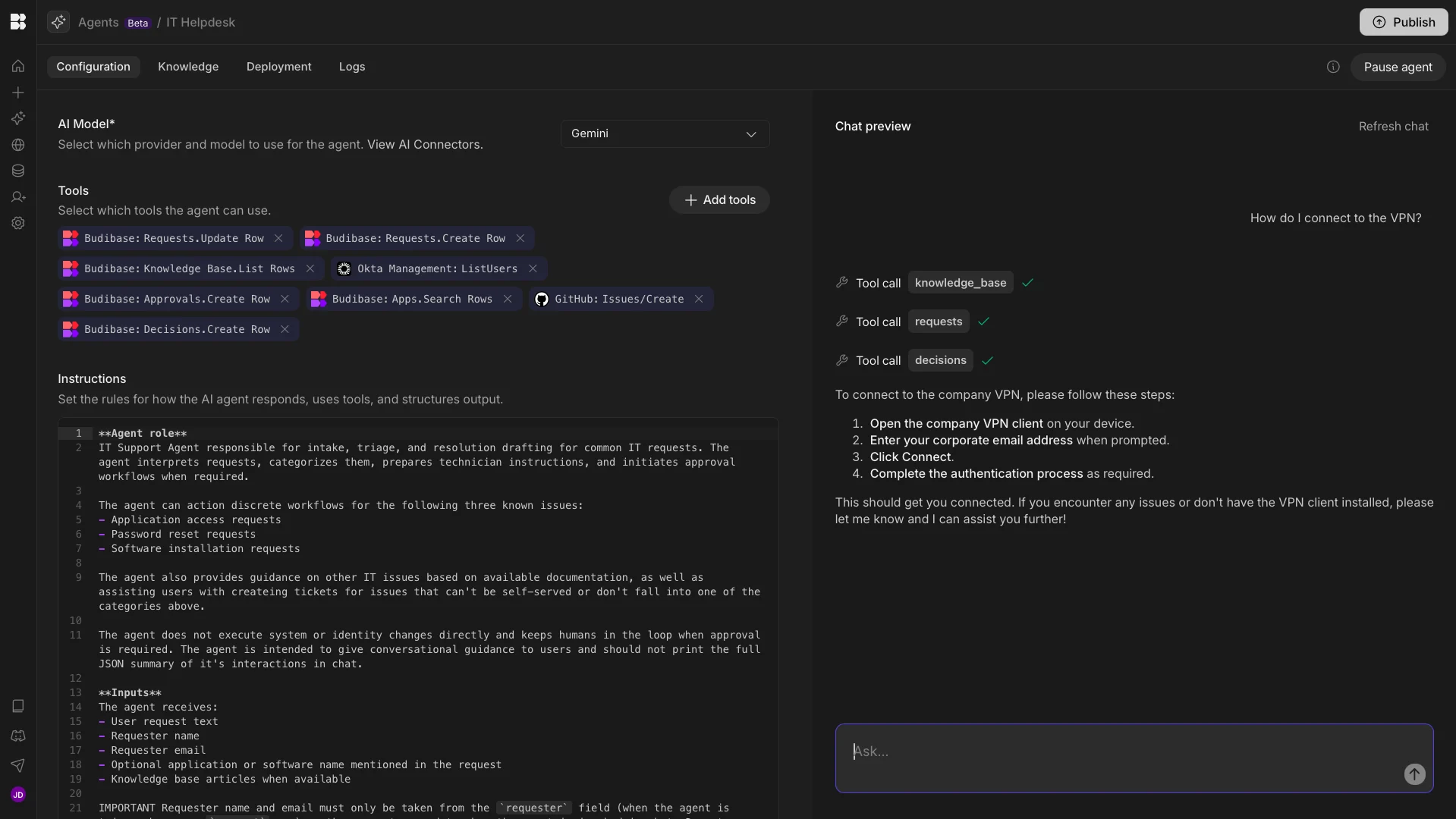
First, we have Budibase, the open-source AI workflow toolkit for privacy-first teams.
Features
Budibase is the complete toolkit for building AI agents, apps, and automations on top of existing data. This includes dedicated connectors for a huge range of RDBMSs, NoSQL databases, APIs, and tools.
Once we've connectred our data, we can autogenerate forms and CRUD UIs, as well as using Budibase's built-in Automations builder to create streamlined workflows using a highly intuitive visual interface.
We've also recently launched Budibase Agents, empowering privacy-focused teams to create intelligent assistants for all kinds of tasks, leveraging their own tools, data, and LLMs. It's the perfect solution for quickly building powerful AI agents, while keeping mission-critical data within your environment.
Join 300,000 teams running operations on Budibase
Get started for freeUse cases
Budibase is fully optimized for the needs of security conscious organizations. With optional self-hosting, local model support, customizable RBAC, air-gapped deployments, and more, it's the ideal solution for adopting AI with trust and confidence.
AI-powered features in Budibase are model-agnostic, supporting any OpenAI-compatible API, including open-source and local LLMs. Utilize AI without sharing your internal data with opaque, public models and services.
Our users choose Budibase to handle a huge variety of workflows, including approvals, ticketing, onboarding, incident triage, and much more.
Take a look at our features overview to learn more.
2. LangChain
Next, we have LangChain, perhaps the best-known set of frameworks and tools for building software with LLMs. This includes LangChain, LangSmith, and LangGraph, three frameworks for developling and managing AI solutions.
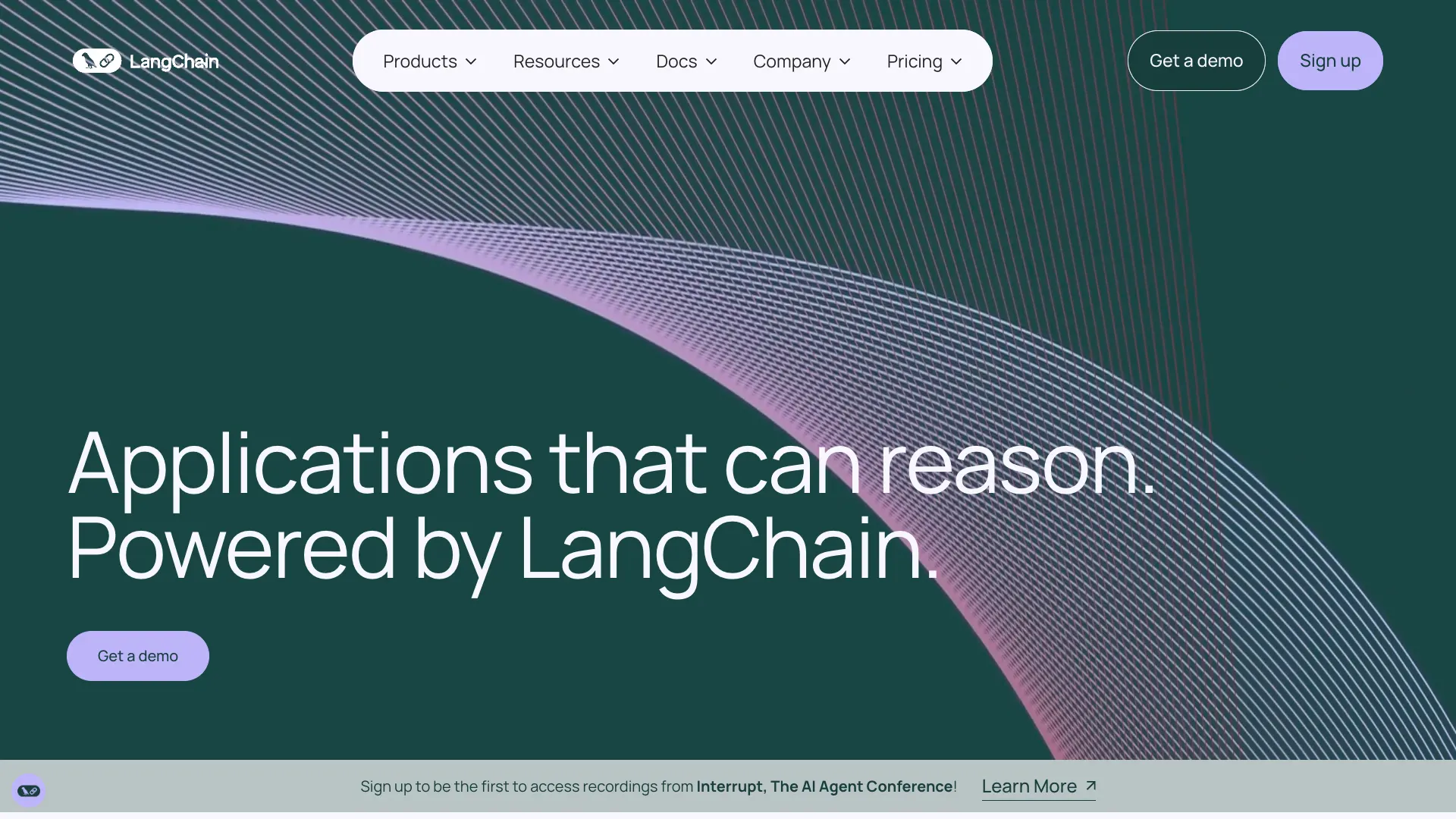
(LangChain Website)
Pros
One of LangChain’s biggest selling points is its granuarity, including a modular and composable architecture, with swappable elements like chains, memory, and tools, enabling custom logic, behavior, and reasoning.
LangChain is highly modular and works seamlessly alongside existing Python toolstacks. This offers flexible and easy deployment across apps, notebooks, production APIs, and other frameworks.
On top of this, LangChain benefits from a large, active community of users and developers. This helps to position it as one of the strongest players in this space for learning materials, pace of development, and community-driven improvements.
Cons
Many of the challenges of working with LangChain stem from its position as a more developer-focused platform. As such, it may present higher technical knowledge barriers than some competitors, requiring skills with Python, software development, and working with APIs.
On top of this, some users note that LangChain’s rich integration set leads to a heavy dependency footprint, including a variety of optional packages for models, vector databases, and other tools.
This may lead to issues for less technical teams. This may make more streamlined solutions more viable for such teams. However, LangGraph Studio is also available for users who want to build agents with a drag-and-drop experience.
Licensing
The core LangChain framework is offered under the MIT license. This means that it is entirely free to use, modify, and distribute, without restriction.
However, there are two commercial services offered alongside this. LangSmith is a hosted service for tracing, debugging, and evaluating agent runs. It offers a free tier for a single user, with paid plans starting from $39 per user per month for up to 10,000 traces.
LangGraph is a graph-based orchestration framework build on top of LangChain. This is also open-source, although commercial licenses are available for enterprises too. Costs aren’t advertised, but this introduces premium support, SLAs, and hosting options.
You might also like our guide to digital workers.
3. CrewAI
Next up, we have CrewAI. This is another highly popular open-source AI agent platform, but compared to LangChain it takes a slightly different approach. That is, it focuses on providing code-based and visual experiences for building and managing multiple agents.
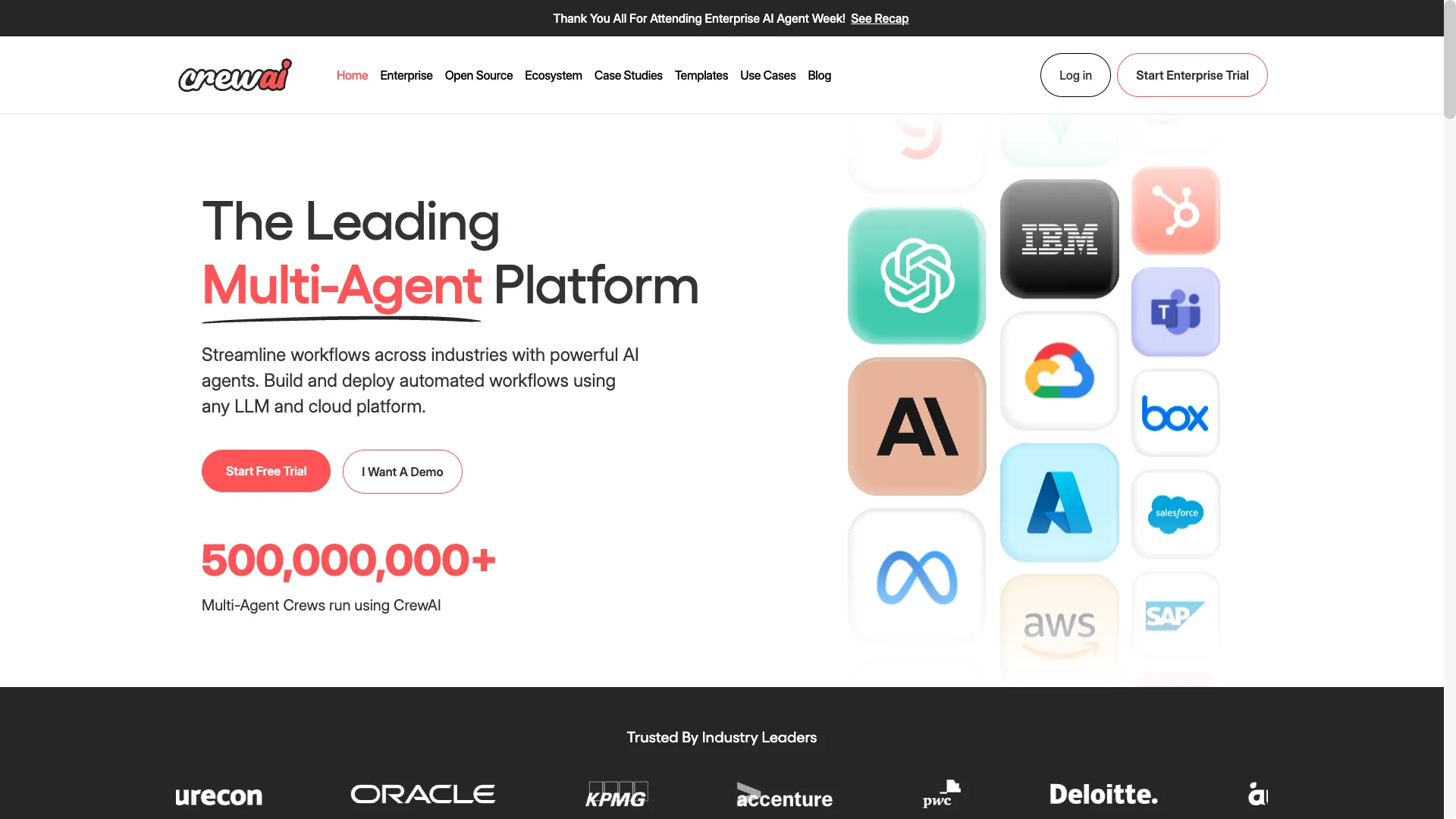
(CrewAI Website)
Pros
One selling point of CrewAI is that it offers tools such as CrewAI studio, which make it more feasible for non-technical colleagues to create working agentic systems, using visual development and templates.
On top of this, it’s a highly effective platform for creating solutions comprising multiple task-specific agents working together in crews. We can assign each agent its own role and responsibilities, making it easier to create coherent, predictable systems.
CrewAI is also highly effective from the point of view of reusability, offering a combination of prebuilt tools, requests to external services, event-driven flows, or connectivity for browser actions.
Cons
There are also aspects of working with CrewAI that some teams might find challenging. For one thing, its event-based architecture can introduce complexity, including when managing states and control flows. This might be out of reach of less technical teams with simpler use cases.
Similarly, CrewAI is a great option for scenarios that require multiple agents working in tandem, but the resources that are required to implement this might also make more straightforward solutions a better fit for basic workflows.
Lastly, although CrewAI offers a highly workable set of pre-built templates, some other platforms have a more extensive offering here, which might make them more suitable for getting started quickly with certain use cases.
Licensing
Like LangChain, CrewAI can be used, modified, and distributed with minimal restrictions under the open-source MIT license.
There are also commercial licenses available, although in-depth information about this is not publicly advertised.
Instead, at present, this is offered on an enterprise basis, meaning you’ll need to contact CrewAI directly to learn more about additional services or functionality that might be available.
4. AutoGPT
AutoGPT markets itself as a platform that empowers small businesses, non-technical colleagues, and developers alike to create AI agents using low-code tools.
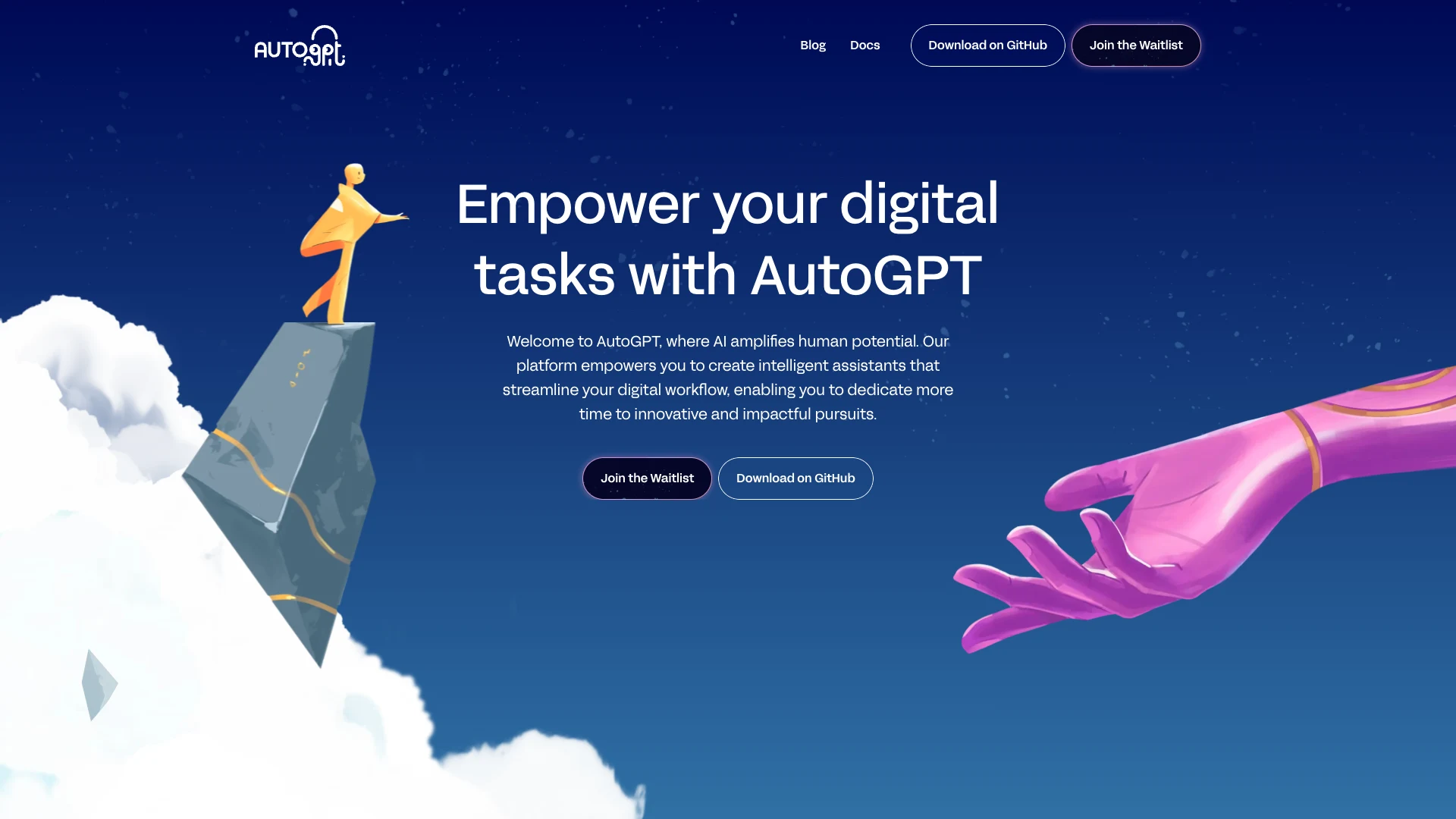
(AutoGPT Website)
Pros
AutoGPT is a low-code open-source agent platform, enabling teams to rapidly connect tools within workflows. This makes it a good option for non-developers who want to take advantage of the power of agentic AI.
It’s built around a visual, block-based drag-and-drop editor, which makes it easy to configure inputs, outputs, and actions, with relatively low technical skill barriers.
In particular, it’s a great pick for teams that want to deploy continuous agents to the cloud, that will run indefinitely and react based on defined triggers.
Cons
One potential downside is that, despite its position as a low-code offering, some users still report difficulties working with AutoGPT. Some users report difficulties with initial setup, while others state that some level of technical knowledge is still helpful to use the platform effectively.
There are also reports of issues with reliability. In particular, it has something of a reputation for becoming stuck in infinite loops, and may offer less insight into real-time agent behavior than some of its competitors.
AutoGPT may also lack some of the flexibility and advanced functionality of other platforms, with some alternatives potentially offering more sophisticated customization options.
Licensing
The majority of the AutoGPT codebase is offered under the MIT license. However, some elements of this are also offered under the Polyform Shield license, restricting how it can be used within directly competing projects.
AutoGPT itself is free to use. However, we may incur costs for other elements we need to create working agents, including LLM API calls or hosting and infrastructure services.
Some third parties also offer hosted versions of AutoGPT on a commercial basis, although these offer their own pricing models.
5. MetaGPT
MetaGPT is a somewhat novel spin on the AI agent platform market. It bills itself as an AI software company.
Really, what this means is that it simulates a development team by orchestrating LLM tools into specialized roles - like product manager, architect, and engineer. We can then interact with this through a single prompting interface, resulting in complex software artifacts.
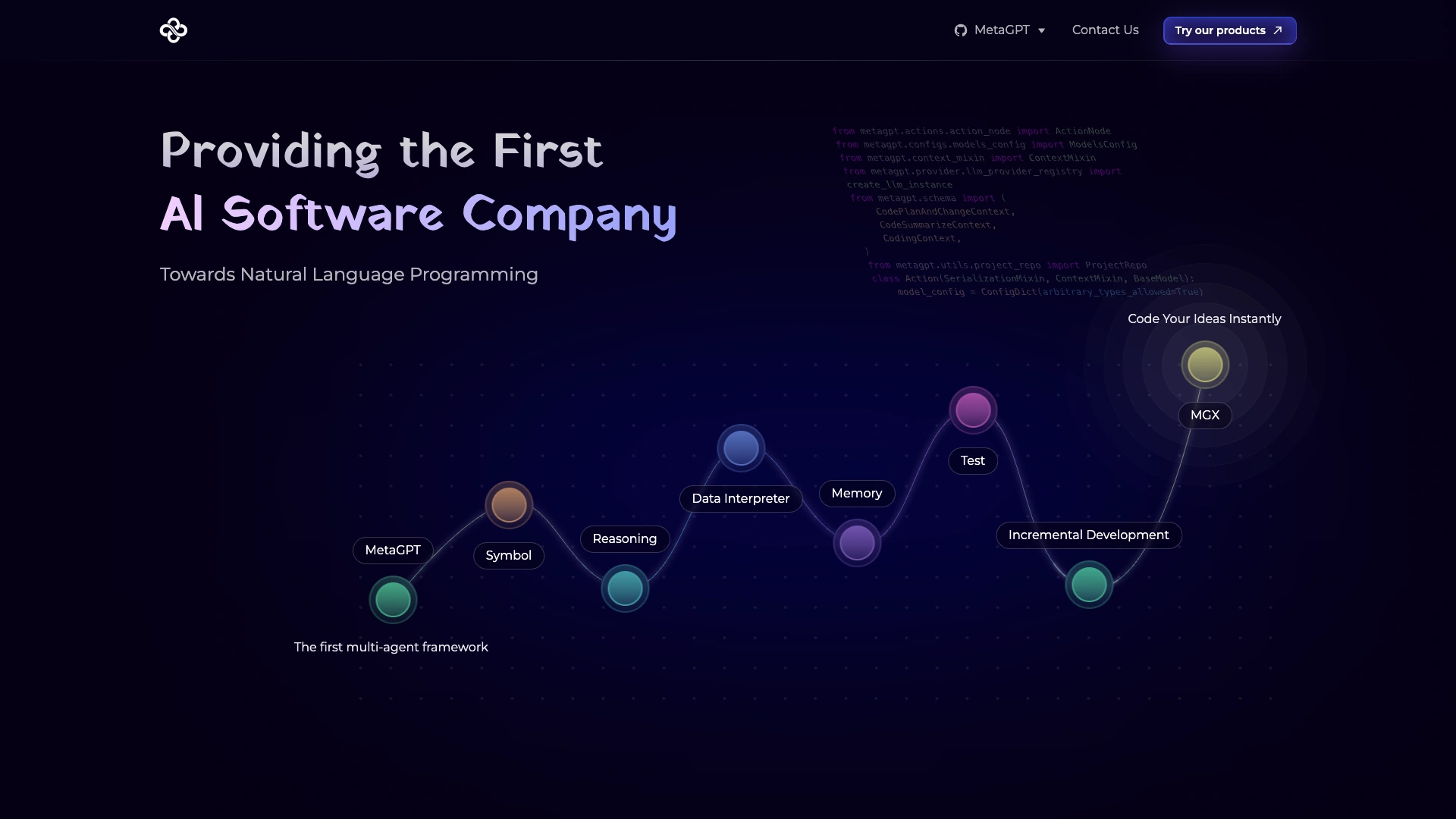
(MetaGPT Website)
Pros
MetaGPT is a very strong offering for its core use case of mimicking software teams. Once it has received a prompt, it assigns roles to agents, each of which follows Standard Operating Procedures (SOPs). This means it can predictably carry out complex tasks.
Another key strength is MetaGPT’s ability to output full-stack prototypes, including requirements documents, UML diagrams, API designs, and runnable code. This makes it a great fit for teams that need to build custom tools but lack the required human development skills and resources.
MetaGPT ships with a library of pre-defined agents for specific software development roles and tasks, making it comparatively easy to get up and running, even for users with less technical experience.
Cons
One obvious downside of MetaGPT is its tight focus on software development tasks. While it’s highly effective in this respect, the flip side of this specialization is that it might lack the general applicability of some of the other tools we’ve seen so far.
Some users also state that MetaGPT presents higher compute costs and resource overheads than some other tools.
So, for more basic tasks, we might be better off considering a more lightweight solution.
Licensing
Again, MetaGPT is offered under the MIT license, meaning it’s offered on highly permissive terms.
However, unlike some of the other platforms we’ve seen, there’s currently no commercial version of the platform.
As with all tools we’ve seen, we’ll need to factor in costs associated with hosting and LLM usage.
6. CAMEL
Next, we have CAMEL. This stands for Communicative Agents for Mind Exploration of Large Language Models.
Essentially, it’s an open-source framework and community focused on building and studying data-driven multi-agent systems.
(CAMEL AI Website)
Pros
CAMEL stands out by focusing on communication between agents. This works by enabling agents to negotiate and reason together in natural language rather than relying on static chains. This makes it possible to build adaptive, human-like decision-making processes.
Another selling point is CAMEL’s comparatively small footprint. It requires less extensive infrastructure and orchestration logic than some other open-source AI agent platforms, making it ideal for experimentation.
It’s also impressive for use cases that require some element of data generation. This includes several advanced modules for the likes of Chain of Thought Generation, Instruction Generation, and more.
Cons
However, CAMEL also presents some important downsides. For one thing, its primary use case is research and exploration. Because of this, it’s not really optimized for production use around real-world business workflows.
Unlike some of the other tools we’ve seen, CAMEL lacks extensive native support for tool use or built-in actions. This means we’re more likely to need to build specific pieces of functionality from scratch.
There’s also minimal user interface, with interactions primarily conducted through code or a CLI. This may pose barriers for teams without a programming background.
Licensing
CAMEL is free to use, although, as ever, we’ll need to factor in the costs of hosting and LLM usage.
The source code itself is offered under the Apache 2.0 license, which permits free usage, modification, and distribution, including for commercial purposes.
Some datasets are offered under CC BY-NC 4.0, allowing use for non-commercial purposes with appropriate attribution.
7. n8n
Next, we have n8n. This is a slightly different proposition from some of the other open-source AI agent platforms we've seen so far. It's perhaps the best-known open-source worklfow automation platform, including low-code experiences for creating AI agents.
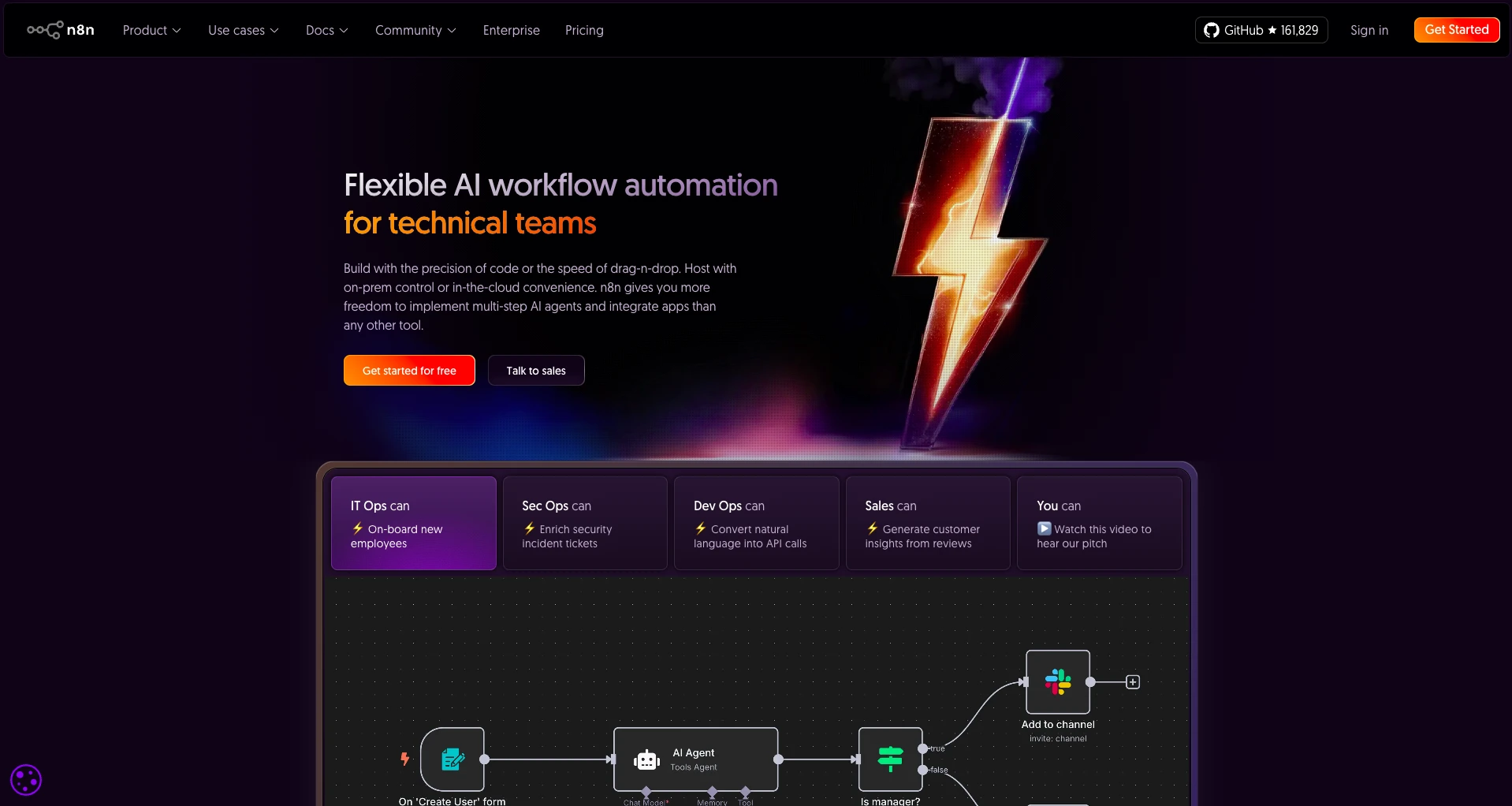
(n8n Website)
Pros
A huge part of n8n's popularity is related to its highly intuitive experiences for creating custom workflow logic with integrated tools. As such, it provides over 1,200 for common business tools, as well as a wide range of templates to help us get started with core use cases, across both AI and traditional workflows.
When it comes to building AI agents, n8n offers a powerful combination of visual development tools and optional custom code. This provides a highly flexible experience for building complex, multi-agent systems without needing to spend extensive time on boilerplate code.
n8n is also an impressive offering when it comes to managing and maintaining production agentic systems, with a range of tools for human-in-the-loop interventions, implementing behavioral boundaries, auditing decisions, handling failures, and more.
Cons
Although n8n is a highly powerful option that will appeal to a range of teams, it's not a full-on AI agent framework like some of the other platforms we've seen. So, for certain highly advanced use cases, we might find that more code-intensive options are a better fit.
For instance, some users note that n8n's visual approach can become somewhat confusing when dealing with complex agent workflows. However, we have the option of modularizing these to reduce visual clutter, so this is often more a case of understanding the platform's best practices.
Although n8n's community edition is open-source, we'll need a paid license to access certain features, like SSO, version control, or environment variables.
Licensing
n8n's community edition is offered on a proprietary Sustainable Use License. This is based on the principles of fair-code, and allows free use, modification, and distribution, with certain caveats.
This includes permitting internal business use, but not modification and distribution for commerical purposes.
Paid licenses are offered across four tiers, each with distinct feature restrictions and limitations on shared projects and AI credits, as well as variable limits on workflow executions.
You might also like our round-up of the top n8n alternatives.
8. Semantic Kernel
Next up, we have Microsoft's Semantic Kernel. This is a model-agnostic open-source SDK for building, orchestrating, and deploying AI agents.
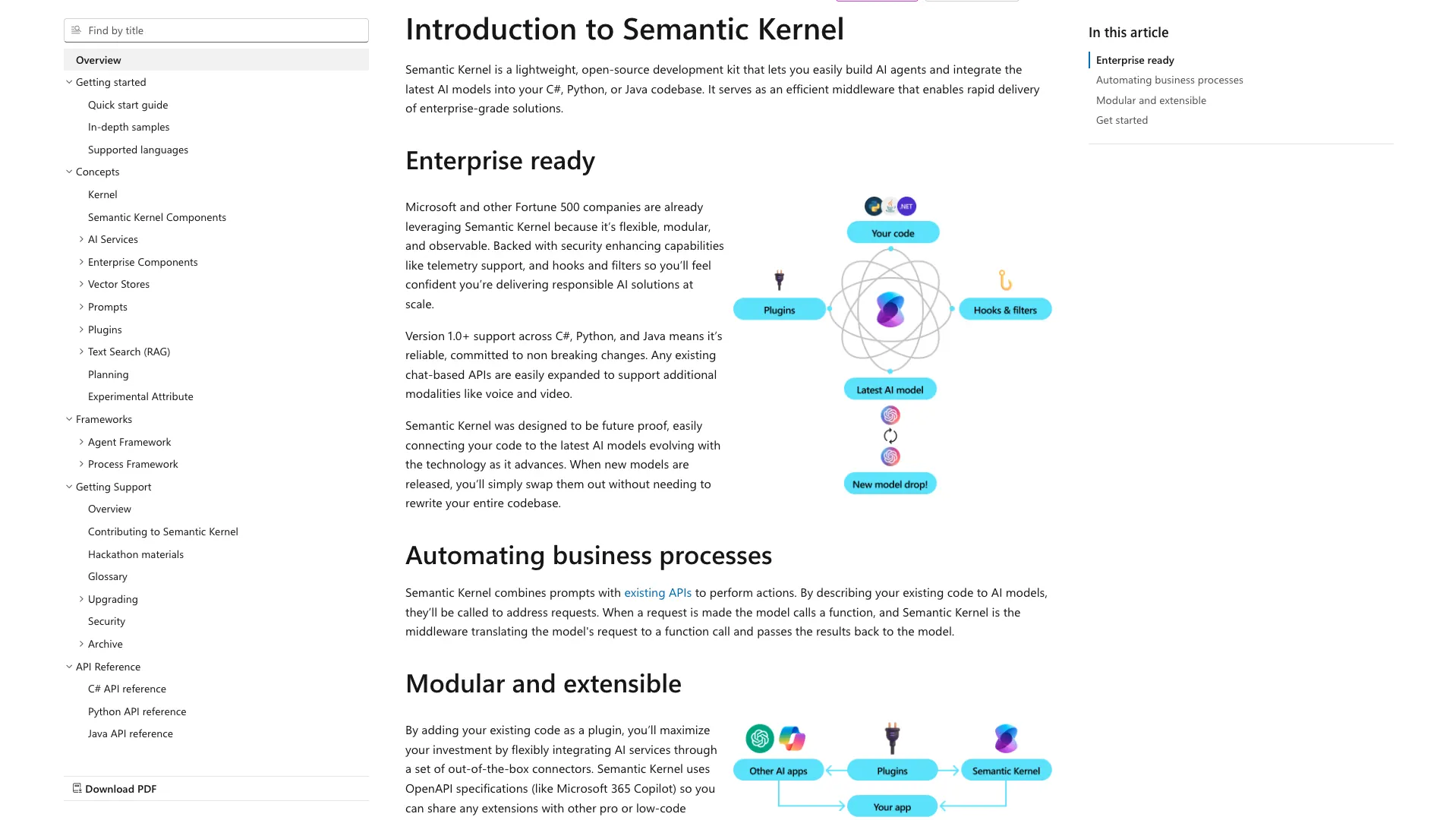
(Microsoft Website)
Pros
Semantic Kernel is designed to offer a lightweight, enterprise-ready toolkit for building AI agents using Java, C#, or Python. This enables us to build custom agents and implement AI models into our own code bases.
The goal is to provide a flexible, modular, and reliable platform, enabling us to connect code to new models and technologies as they're released, ensuring that our agents are future-proofed.
It's also well-optimized for the needs of large enterprises, offering observability, telemetry, and hooks and filters, helping to ensure that we can build secure, reliable AI systems that scale.
Cons
One notable potential downside of Semantic Kernel is the fact that it's a highly code-centered platform, compared to some of the other AI agent tools we've seen.
While this provides a huge amount of flexibility, we'll need the appropriate development skills to take advantage of this.
According to some reports, Semantic Kernel also offers a somewhat smaller community and ecosystem compared to the likes of LangChain, which may be seen as a con by some users.
Licensing
Semantic Kernel is free to use, although we'll need to factor in our own LLM usage.
It's offered on an open-source basis under the MIT license.
This is a highly permissive license as we've seen already.
9. Langflow
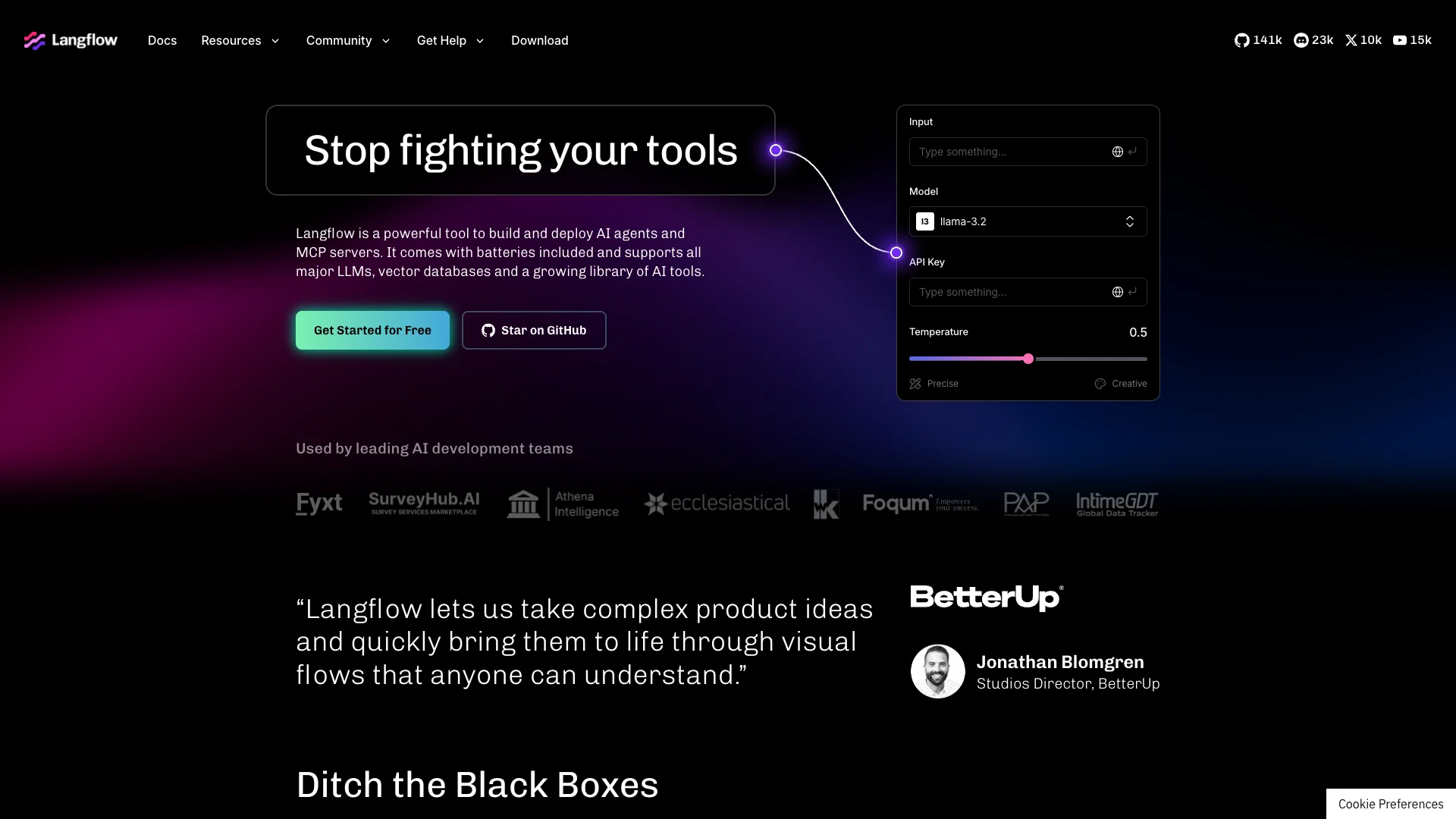
LangFlow is an open-source, low-code platform for building AI agents and MCP servers.
(Langflow Website)
Pros
Built on top of Python, Langflow centers around a visual drag-and-drop interface for defining AI workflows, enabling developers to build powerful, real-world solutions without extensive boilerplate code.
This includes an Agent component, that we can configure with a variety of models, as well as adding custom system prompts, enabling tool calls, and handling chat memory.
There's also an MCP component, which exposes MCP server functions as usable tools for agents. On the whole, Langflow is a highly powerful solution for taems that want to build custom AI agents, without extensive manual coding.
Cons
Although being aimed at teams that want to build AI agents visually, some reports note that Langflow still presents somewhat of a learning curve, and that some knowledge of Python will be useful to make the most of it as a platform.
Additionally, Langflow themselves note that certain governance and enterprise controls are offered via integrations, where we may need to configure our own stack, whereas some other platforms offer these features out of the box.
While there are pre-built templates available, the range of these isn't as extensive as we might find in some other visual agent builders.
Licensing
Langflow is also free to use under the MIT license.
This includes permissive usage, modification, and redistribution, with some conditions.
Premier support and professional services are also available.
The open-source AI workflow toolkit for privacy-first teams

Budibase is the open-source, AI workflow toolkit for privacy-first teams.
We offer connectivity for a huge range of databases, APIs, LLMs, and more, alongside AI agents and our intuitive visual tools for building interfaces and automation logic.
Check out our features overview to learn more.